What Does Causation Mean In Tort Law
Legal causation is different from factual causation which raises the question whether the damage resulted from the breach of contract or duty. The first requirement is that of cause in fact.
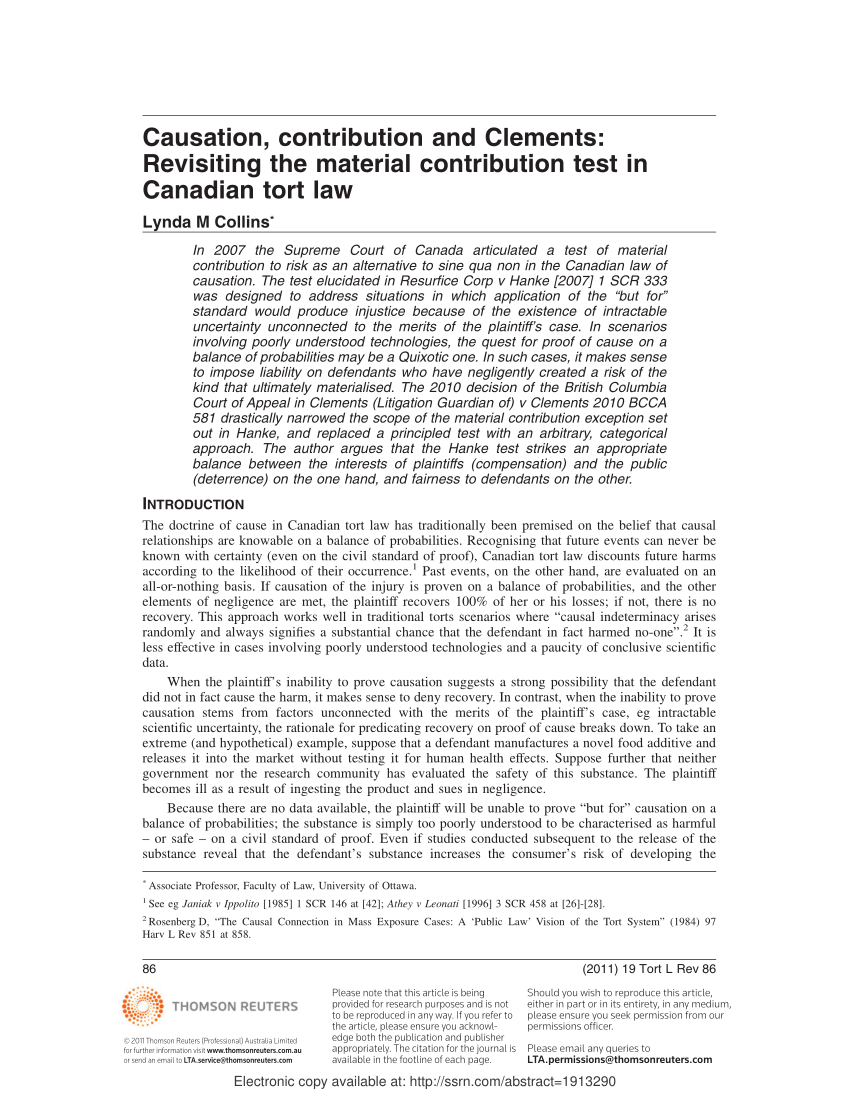 Pdf Causation Contribution And Clements Revisiting The Material Contribution Test In Canadian Tort Law
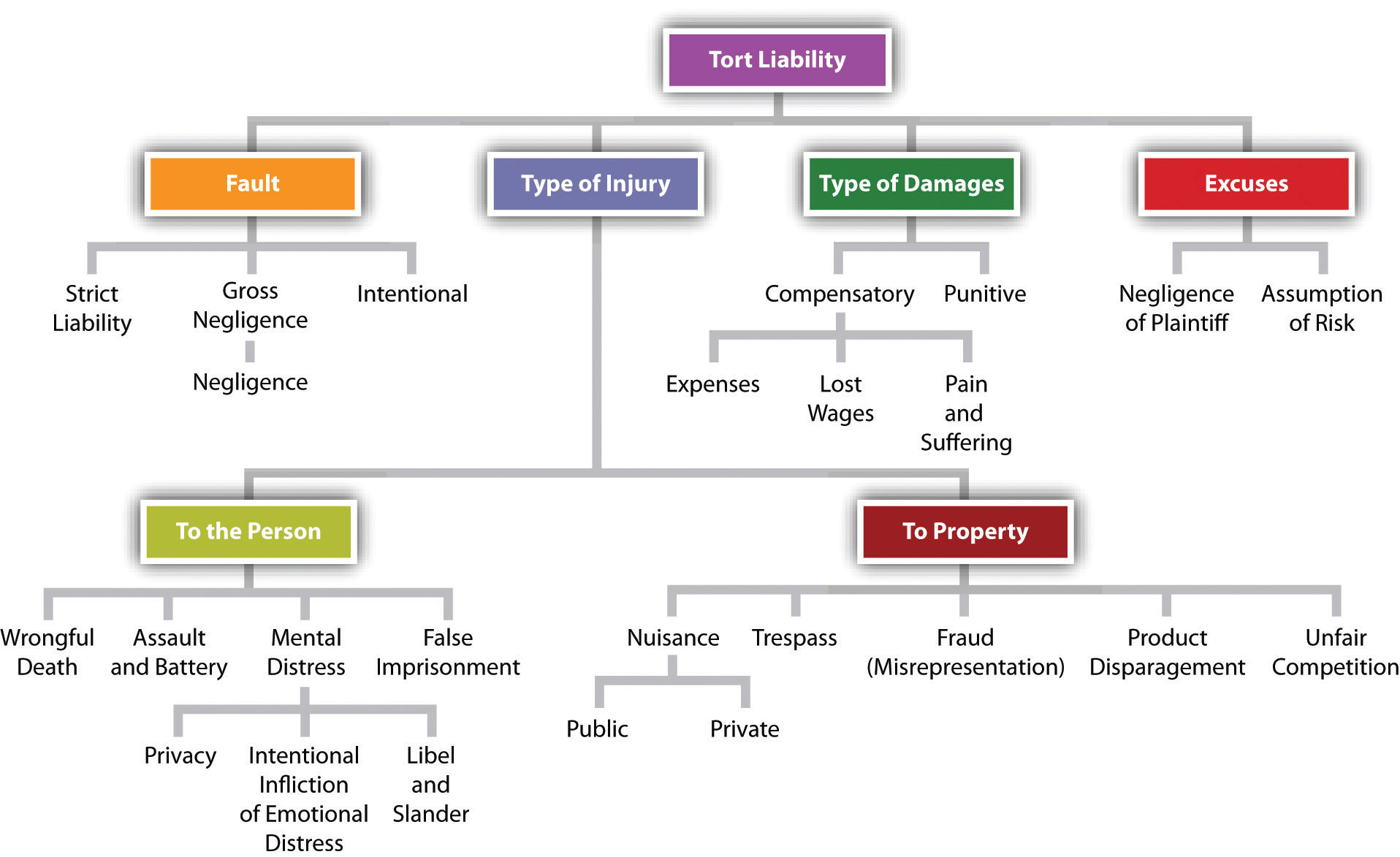
Strict liability negligence and intentional wrongs.

What does causation mean in tort law. Causation only applies where a result has been achieved and therefore is immaterial with regard to inchoate offenses. In a personal injury case one must establish causationmeaning that its not enough to show that the defendant was negligent. Causation Law and Legal Definition.
Factual Causation Is Essential to Tort Liability Academicians who seek an overarching theoretical justification of tort law fall into two main camps4 Economic analysts assert that tort law should and by and large does aim at promoting efficient resource allocation5 Corrective-justice6 theorists hold that tort. The third element of negligence is causation. It means that but for the negligent act or omission of the defendant the plaintiff would not have been harmed.
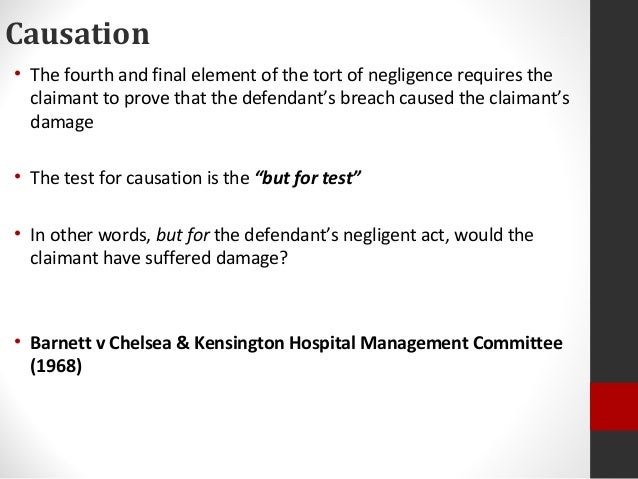
In other words the question asked is but for the defendants actions would the harm have occurred. Shouse Law Group Personal Injury Negligence Proximate Causation. A plaintiff in a tort action should prove a duty to do or not do an action and a breach of that duty.
Factual Causation Much like the criminal law tort law uses a but for test in order to establish a factual link between the conduct of the defendant and the injuries of the claimant. Causation is the relationship of cause and effect of an act or omission and damages alleged in a tort or personal injury action. The concept of causation is central to myriad areas of tort law.
Causation is the causal relationship between the defendants conduct and end result. There are actually two aspects of cause which are known as cause in fact and proximate or legal cause. There are two types of negligent causation actual cause and proximate cause.
Tort law or the area of law in which someone suffers harm and results in legal liability can become extremely complicated once you get into the nuts and bolts. The defendants conduct was a cause of the plaintiffs harm if the harm would not have occurred absent the defendants negligence ie without which the harm would not have occurred. It is the act or process that produces an effect.
Accordingly once factual causation is established it is necessary to ask whether the law is prepared to attribute the damage to the particular breach notwithstanding the factual connection. Actual cause is sometimes referred to as cause in fact. In other words causation provides a means of connecting conduct with a resulting effect typically an injury.
This is known as the but for test. Causation has two prongs. At its root causation means that the actions of the defendant led to the plaintiffs injuries.
Causation is the relationship of cause and effect of an act or omission and damages alleged in a tort or personal injury action. First a tort must be the cause in fact of a particular injury which means that a specific act must actually have resulted in injury to another. Causation means the causing or producing of an event.
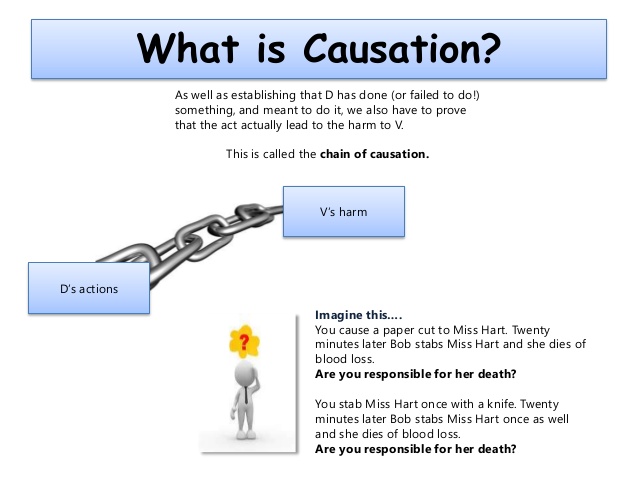
Think of this as establishing a cause and effect relationship between the defendants actions and the injuries of the plaintiff. Causation is an element common to all three branches of torts. Causation means the causing or producing of an event.
The traditional legal model of but-for causation necessary condition causation while fundamental to the idea of causation in general is insufficient to account for causation in overdetermined causation cases. A defendant commits simple battery only if she intentionally causes bodily contact with another. The issue of cause or causation is not as simple as it may seem.
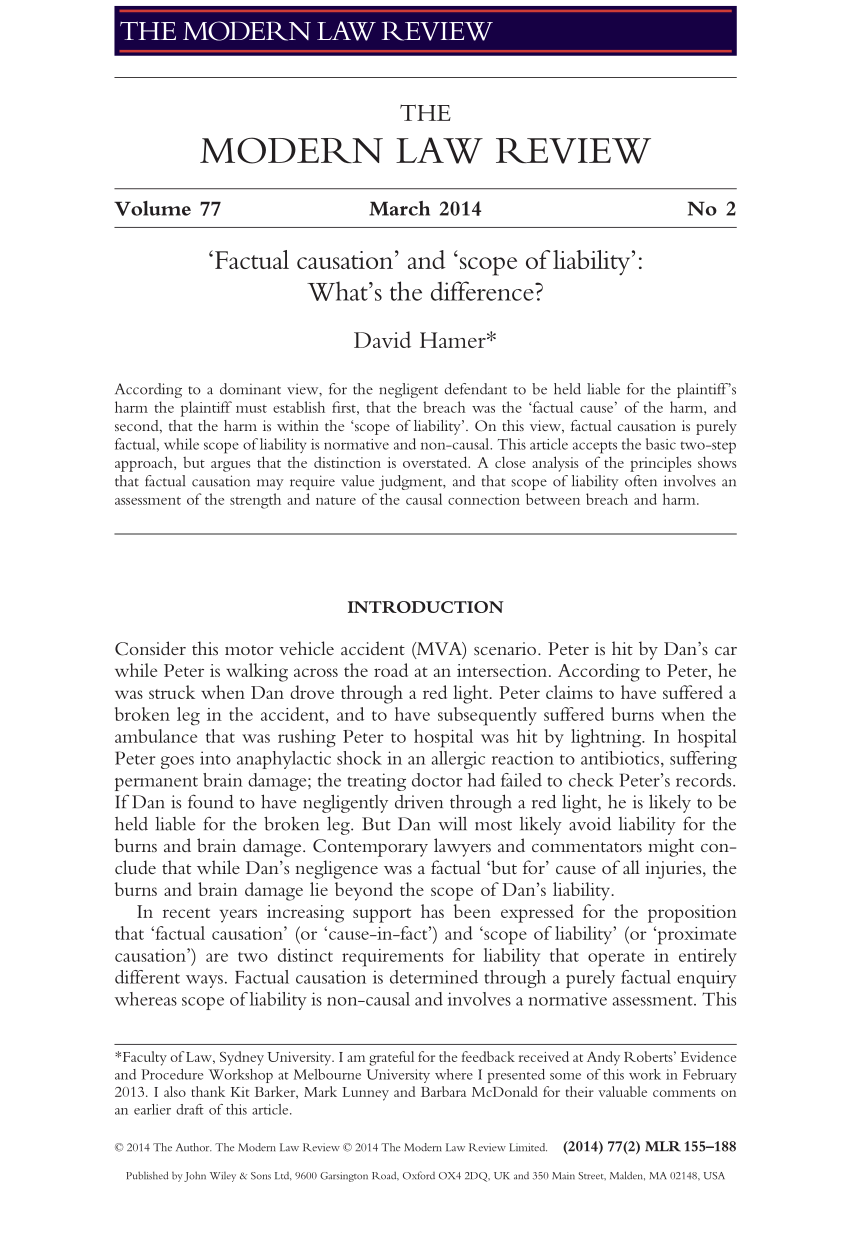
Cause in fact simply means that the accident would not have occurred except for the fact of the defendants negligence. Meaning ofcausal connection the way to test whether it exists in a given case is to ask whether in the circumstances the hannful result would have occurred in the absence ofthe wrongful act. The conventional wisdom about the causation requirement in both criminal law and torts is that it in reality consists of two very different requirements for liability.
Causation in legal terms refers to the relationship of cause and effect between one event or action and the result. A plaintiff in a tort action should prove a duty to do or not do an action and a breach of that duty. That is because of 3 the concept of causation.
The Laws Explicit Definition of Causation 21 The dominant two-tier definition of causation in the law. In tort or personal injury law proximate causation refers to an act or omission significant enough in the chain of events leading to an injury that the law holds the person liable to the victim s. In criminal law it is defined as the actus reus from which the specific injury or other effect arose and is combined with mens rea to comprise the elements of guilt.
13 An action is not. Proximate cause is the primary cause of the injury but it does not mean that it is the only cause or even the closest cause to the accident.
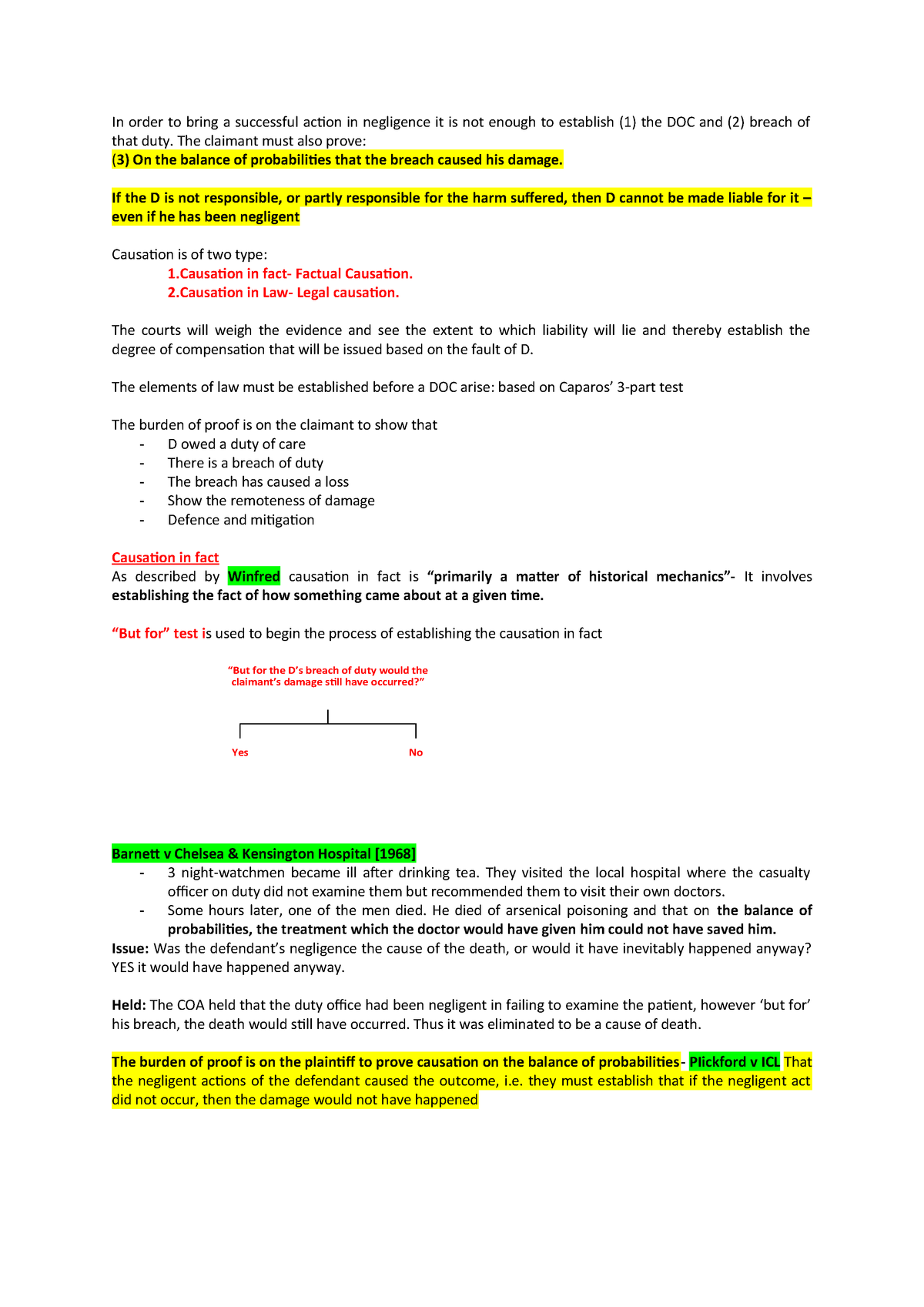 L 7 L 8 Factual And Legal Causation Studocu
 Pdf Causation And The Goals Of Tort Law Donal Nolan Academia Edu
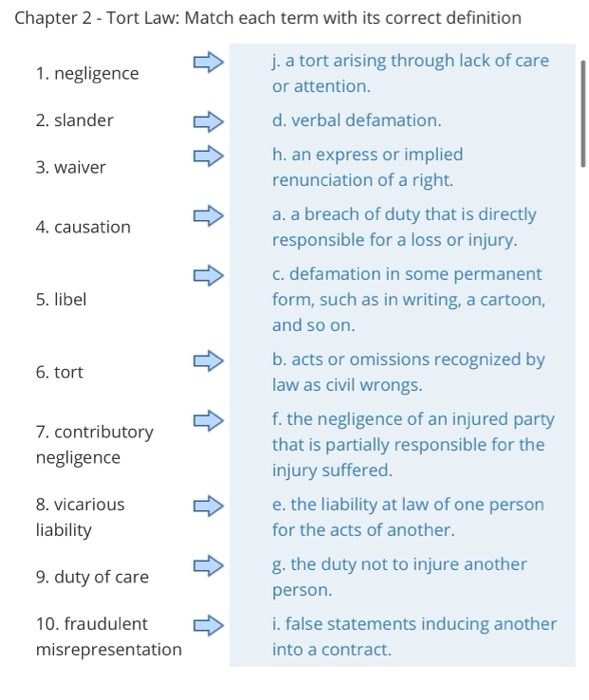 Solved Chapter 2 Tort Law Match Each Term With Its Cor Chegg Com
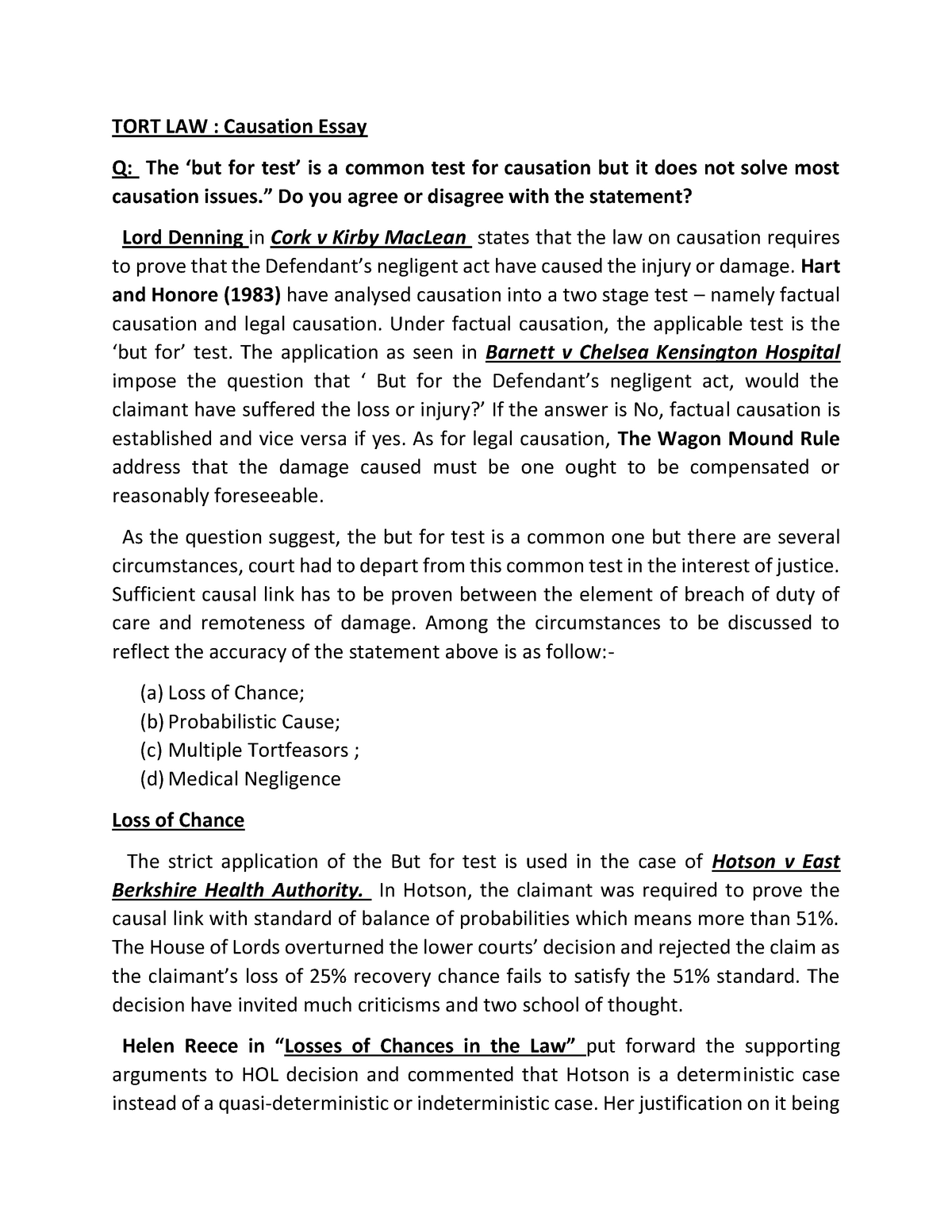 Tort Law Causation Essay Tort Law Studocu

 Introduction To Tort Law
 Causation 2013 14
Causation 2013 14
 Pdf Factual Causation And Scope Of Liability What S The Difference
 Lecture 10 Law Of Tort
Https Eprints Utas Edu Au 9106 2 Coady Pdf
Causation And Legal Responsibility In Negligence Cases
 Tort Law Part 5 The Lawyers Jurists
 What Is The Legal Definition Of Causation Wkw
 Negligence Under Florida Law Gulisano Law Pllc
 Pdf Causation In Tort Law
 What Is Tort Law Definition System Examples
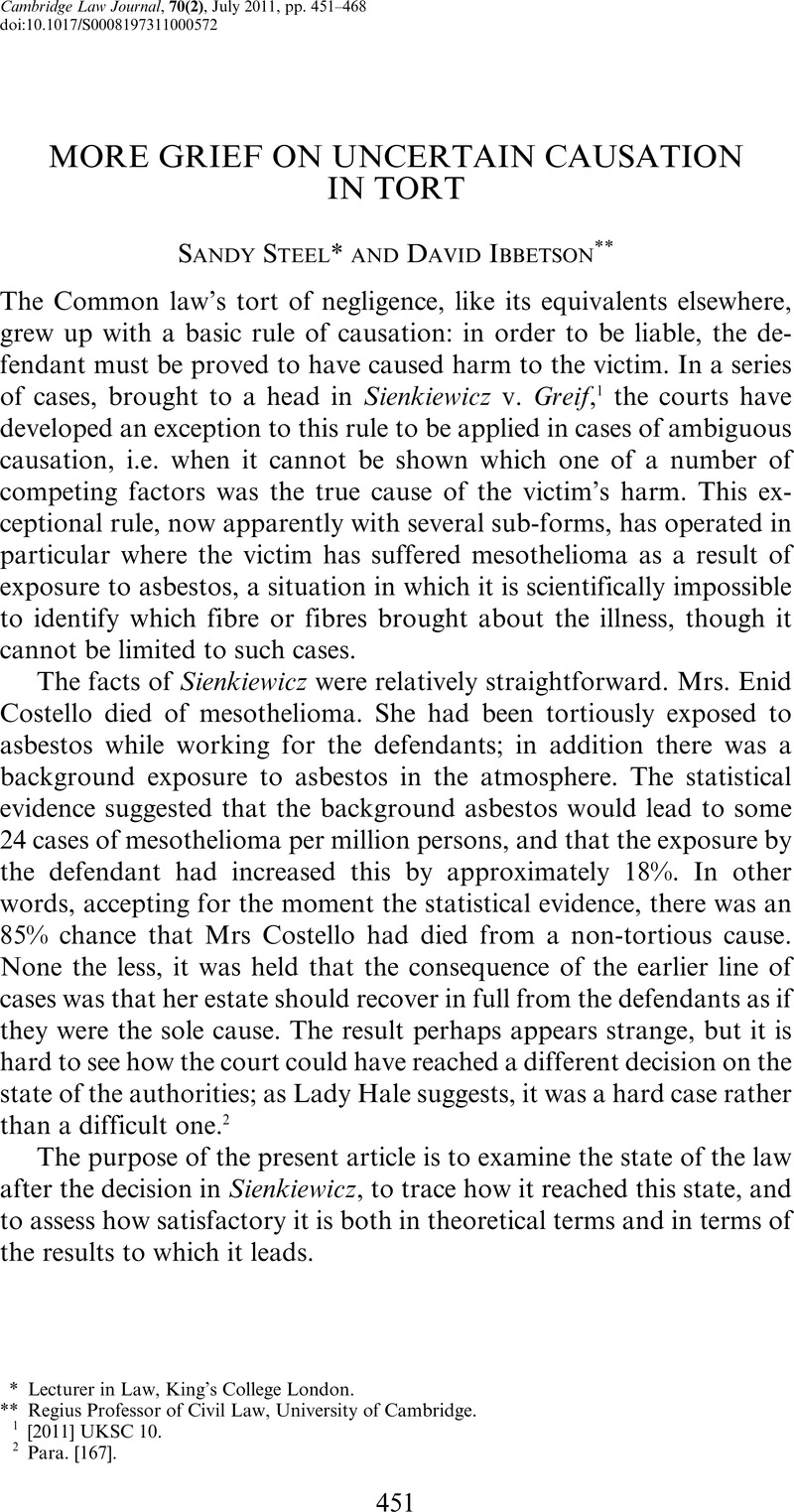 More Grief On Uncertain Causation In Tort The Cambridge Law Journal Cambridge Core
 Tort Law Remoteness Youtube
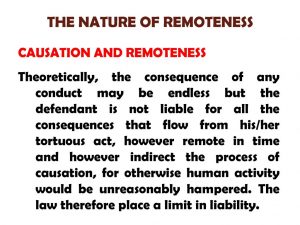 Tort Law Part 6 The Lawyers Jurists